There’s an idea making the rounds on podcasts and in training content right now: that detection dogs are simply hard to read. The argument goes like this. The difference between a dog sniffing dog urine and a dog sniffing target odor, or a dog checking out food and a dog on target, comes down to tiny, subtle changes in behavior. Handlers struggle to see them, and that’s just the nature of the beast.
We disagree. Yes, plenty of teams have this problem. We see it all the time. Handlers with two, three, or even four years on the street bring us detection dogs and trailing dogs they still can’t read. But the problem isn’t built into the dog. It’s built into the training. It isn’t unavoidable, and it isn’t something handlers have to live with. It can be fixed.
What a Detection Dog on Odor Actually Looks Like
Some sourcing behaviors look the same no matter what the dog is working. Head turns, bracketing and working a scent cloud happen whether the dog is working a cloud of urine or a cloud of target odor. The dog is sourcing something either way.
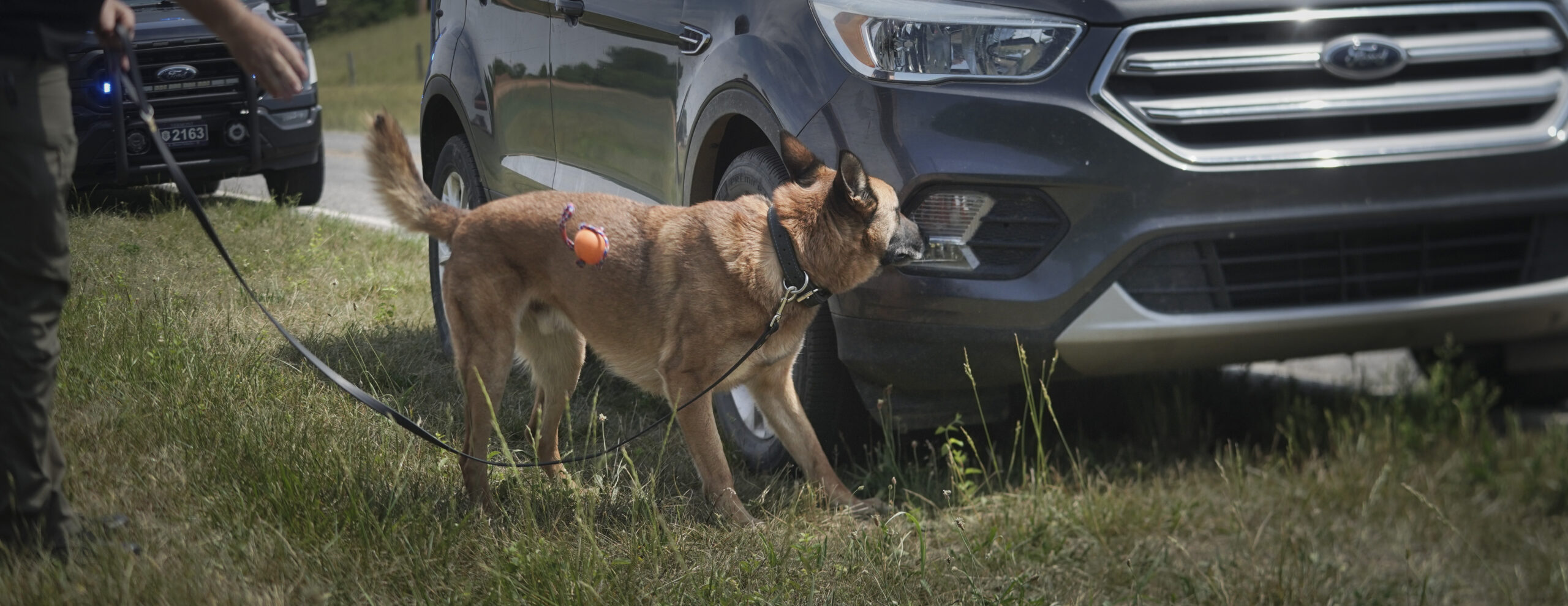
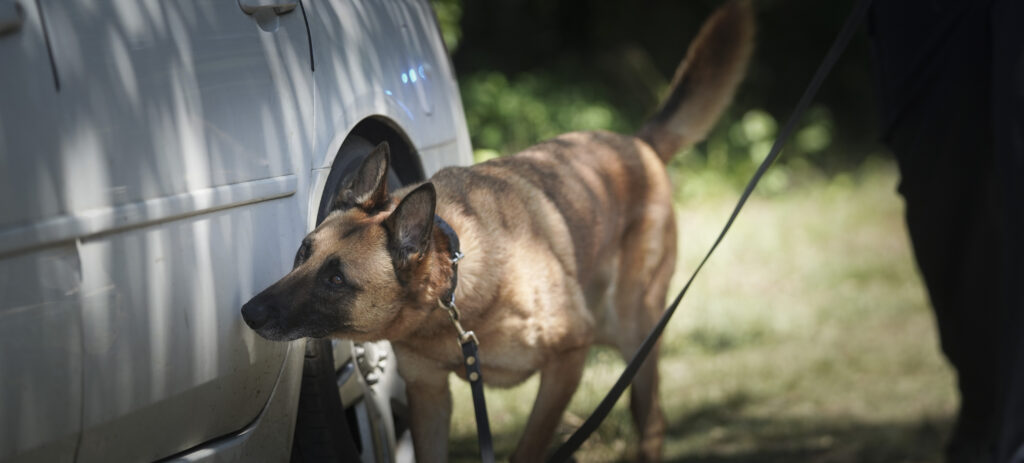
But a dog that is odor fluent, one that knows for certain it has found what it’s looking for and is about to get paid, changes in ways a trained eye can see. Its excitement level changes. Its breathing changes. The way it carries its tail changes. If you take the time to look at each part of the dog’s body, the difference between a dog on a distractor and a dog on target is not small.
So why do so many handlers struggle? We see three causes, and they all have the same three fixes.
Problem One: The Dog Isn't Odor Fluent
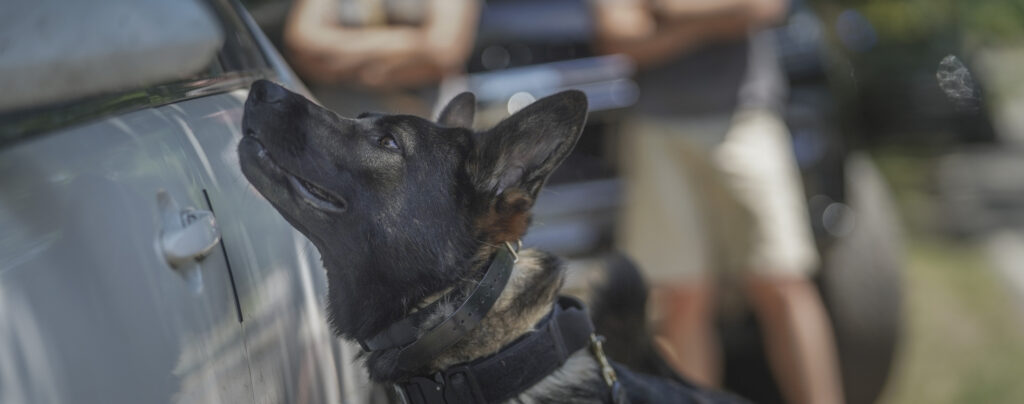
A dog that understands only one or two components of a target odor is going to have doubt when it gets to the source. A dog with doubt is hard to read, because it doesn’t know for sure itself. Hand that dog to a handler who is also unsure, and you have a team that can’t tell what’s going on.
The dog has to understand its target. It has to be crystal clear. Without real odor fluency, you’ll never make any real progress in proofing.
Every target odor is a recipe: several components in fixed proportions. At Highland Canine, we call a dog that knows the whole recipe fluent. A fluent dog can identify every component of the target’s odor on its own, which is what allows it to find the material in any combination, any quantity and any amount of surface area.
Fluency isn’t a feeling a trainer has about a dog. It can be measured, and we’ve measured it. In our 2015–2016 imprint study, we imprinted dogs on cocaine odor and tested them on its components, grouped into seven families. After 30 minutes of contact with the odor, every dog recognized one family. At 45 minutes, they recognized five; at 60 minutes, six; and at 75 minutes, all seven. A second group of dogs, imprinted on their agencies’ real cocaine and working for about five years on average, recognized only 39% of the components.
A dog that knows part of an odor finds only the targets that happen to match that part, and it can’t be sure of anything else. High hides, deep hides, vehicles and “low odor threshold” are names we give to the symptoms. Nearly every one of them traces back to the same root: a lack of fundamental odor fluency.
Problem Two: Proofing Gets Rushed, or Skipped
The second cause is the lack of emphasis on the proofing. Proofing is probably the most overlooked part of the whole detection training process. Too many programs try to train a dog from beginning to end in a very short time, combining imprinting, behavior shaping, proofing and skills training into one fast process, and proofing is what gets squeezed out. It takes longer than imprinting and behavior shaping combined.
Here’s why it matters. By the end of imprinting and behavior shaping, a dog knows what a correct answer looks like. That’s all it knows. Without solid proofing, we’ve given it half the information it needs to make every decision. We told it what’s right. We never taught it what’s wrong. And targets are limited, while non-targets are infinite. When a dog that was never taught what to ignore meets something new, it falls back on whatever information it can get from the handler or the environment. That’s when it gets hard to read.
Proofing has to be part of training nearly every time the dog works. In our training, that means food, tennis balls, Ziploc bags, PVC pipe, dog urine, cat smells, Sharpie markers, and the wrong target odor (explosives for the narcotics dogs and narcotics for the explosives dogs). Proofing also has to cover the things that typically accompany the target, such as the bags and packaging aids are stored. Otherwise you have no way of knowing whether you trained a drug dog or a ziploc bag dog. The goal is a dog that catches the first whiff of a non-target and doesn’t bother investigating any further. It has enough information about that odor to say, “Nope, that’s not what I’m looking for,” and move on.
That only happens if proofing is done consistently and on purpose, and most people aren’t doing it consistently enough. Proofing doesn’t happen by accident because there were snacks lying around the training room.
Odor is Only a Quarter of It
There’s a bigger gap, too. Most programs proof only against olfactory distractors. In our view, that’s about 25% of proofing. The other 75% is what the dog hears, sees, and feels. We proof across all four:
- Olfactory: food, reward items, smoke, other dogs, packaging, and odors that travel with the target.
- Auditory: a ball bouncing, people calling the dog, barking, gunfire.
- Visual: balls, people moving, other dogs working, objects that don’t belong.
- Physical: being bumped, moved, leaned on or lifted while holding the indication.
You can’t control those things on the street, so there’s no point trying to keep them out of training. We put them in on purpose, a little at a time, until they mean nothing to the dog. During the boxes, that starts with one tennis ball bounced once on a wrong box while the dog is committed at the target. If the dog leaves for the ball, it doesn’t get paid. When it goes back to the target, it does. From there we add people calling the dog, more balls, shuffled boxes, other dogs working nearby, and eventually bite suits, a leaf blower and blank gunfire. We proof to a level most people would call nonsensical. By the time a dog leaves the boxes, a dog running up to it, a dog barking at it or a person walking into it doesn’t pull it off odor.
The physical part is not a correction. The dog is doing exactly what it should, holding at source, and it still gets paid for it. Easing its rear over or lifting its back end is just another stimulus, so that being bumped in a bus cargo bay or tripped over in a crowd never pulls it off odor.
A dog proofed this way isn’t hard to read, because the only thing left that changes its behavior is odor.
Problem Three: The Handler Isn't Trained to Read the Dog
Many handler courses are built around training the dog, not the handler. When the priority is getting the dog through the training program, there isn’t much time left to teach the handler how to read it. The handler leaves without understanding why the dog does what it does.
When the handler becomes part of the answer
Handler influence causes some of the worst reading problems we see, and it often starts in training. Helping too much. When dogs are detailed to source every time and detailed to every high hide, they never learn to solve a problem on their own. A lot of people think a dog has to be detailed to a high hide. The reality is the dog was always detailed there, so why would it check high unless you show it? It won’t put in more work than necessary. And every time you show the dog where the odor is, you lose the chance to see all the behavior changes that come with the dog working the scent cloud up to source. A dog that waits for you to show it where to go doesn’t give you much to read.
Correcting the dog for not following the point. We see teams where the handler corrects the dog for not going where the handler points. Now the dog won’t go high unless the handler points because it’s afraid something unpleasant will happen if it does.
Training in the same spots. Train in the same areas over and over, and residual odor builds up. The dog responds to remnant target odor from yesterday’s training, and the handler corrects it for what the handler believes is a distractor. The dog is getting mixed messages.
Feedback the dog learns to look for. We see this at seminars constantly: handlers who struggle with the dog’s commitment to odor. The dog goes into odor, but the handler keeps moving, so the dog keeps moving. Or the dog sources the odor, checks the handler for a cue, and moves on when the cue doesn’t come.
Here’s how that gets built. A known distractor goes out. The dog sniffs it and looks to the handler for feedback. The handler knows it’s a distractor and gives no feedback, so the dog moves on. Now the dog is on actual target odor, and the handler doesn’t know it’s there. No feedback. The dog moves on again. The handler has become part of how the dog solves the problem, and that has to go away.
Learn What “Nothing” Looks Like
Most handlers practice reading their dog only when the target odor is out. That’s backwards. If you can’t recognize what your dog looks like on a potty break or loose in the yard just being a dog, you’ll have a harder time seeing the change when it hits odor.
Run blanks. Watch what your dog responds to non-target looks like. If you don’t understand that, it will be even harder to understand what the dog looks like when it’s on target.
This applies to trailing too. Many handlers rely almost entirely on the dog’s pulling to tell them where the odor is. But a well-selected, high-drive dog pulls nearly all the time. It’s hunting and it’s looking for places to go. When a behavior is constant, it can’t tell you that something has changed.
The Fix: Three Things, Kept Up for the Life of the Team
Detection dogs are really not hard to read when the dog is well trained, odor fluent and well proofed, and the handler understands the difference. Getting there takes a clear plan:
- Odor fluency first. Without it, proofing goes nowhere.
- A complete proofing plan. Olfactory, auditory, physical and visual distractors, worked consistently.
- Handler education. Teach every handler, green or experienced, how to read the dog. More importantly, teach them how to keep up odor fluency and proofing after the course ends. Proofing that isn’t maintained erodes over time and falls apart. It has to be done constantly.
It’s a simple problem with a simple solution. It just takes the time to do it right.
Work on it With Us
Our Odor First seminars are built around exactly these three things: odor fluency, complete proofing, and teaching handlers to read their dogs while maintaining odor fluency and proofing after the seminar ends. If your team is struggling to read its dogs, or you want to make sure it never does, learn more about our Odor First seminars or contact us at 800-406-3243 or policek9@highlandcanine.com.