
Explosives Detection Dogs
Unparalleled explosive detection dogs and handler training programs which produce successful teams
Explosives K9 Training That Builds Trusted Dogs and Exceptional Handlers
At Highland Canine Training, LLC, we have built a reputation for training effective bomb detection dogs and offering comprehensive K9 handler training.
Explosives Detection Dogs Prepared for Your Agency’s Mission
Protecting schools, securing public events, and screening vehicles require a detection team prepared for demanding environments. Your agency needs a dog committed to locating target odor and a handler equipped to interpret its behavior and conduct effective searches.
At Highland Canine Training, LLC, we carefully select and train explosives detection dogs to locate explosive materials, including homemade explosives. Our programs prepare dogs and handlers to search schools, large venues, public event locations, and vehicles entering those events.
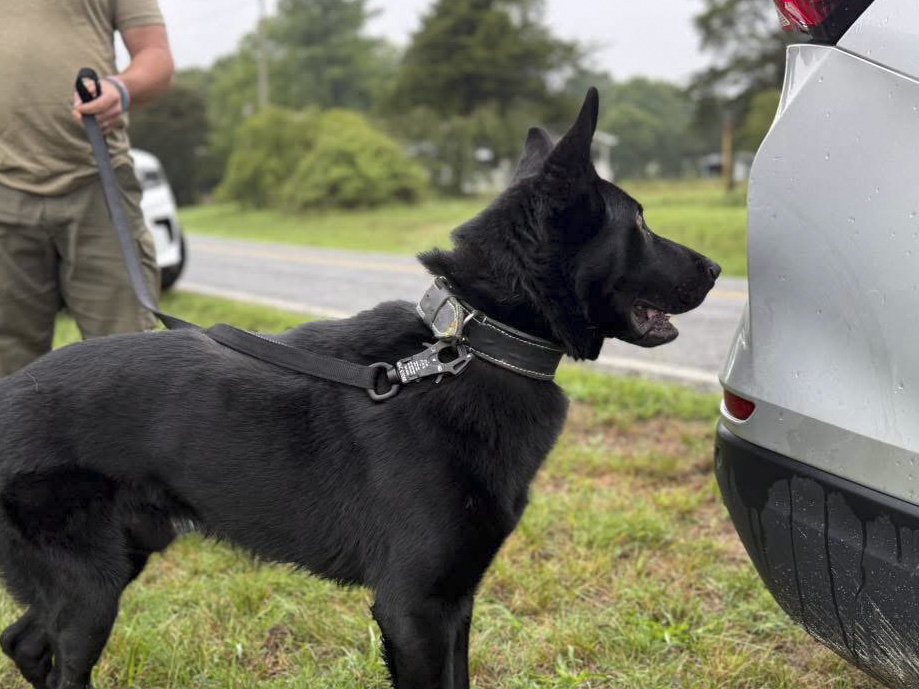
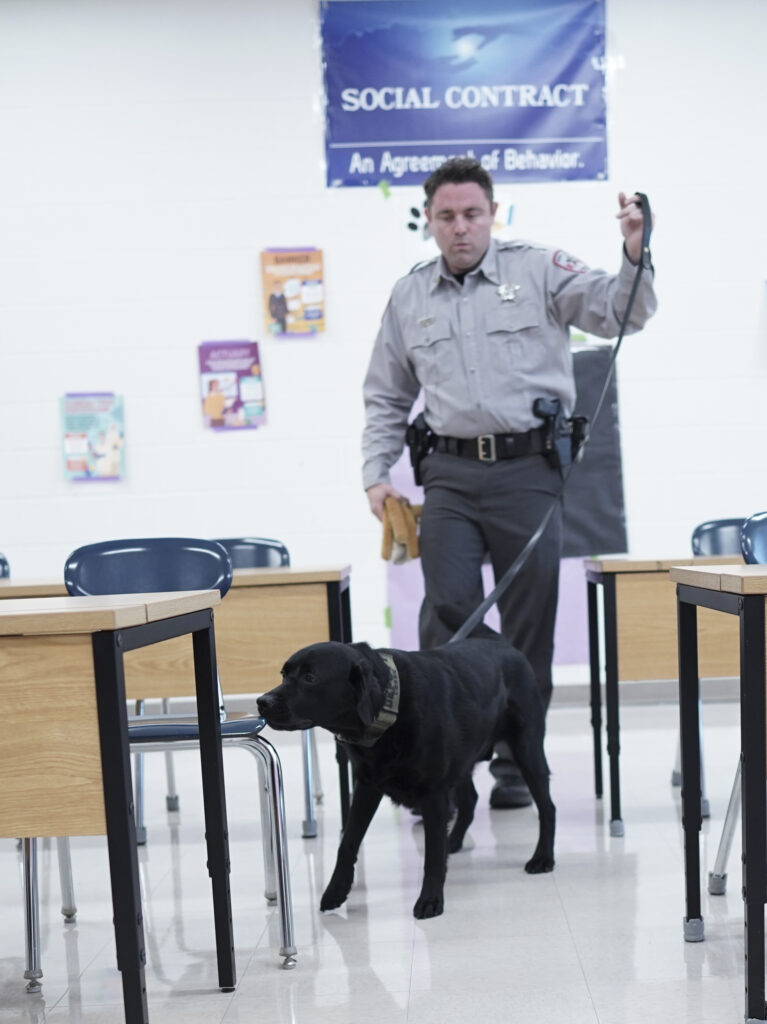
Training for the Environments Your Team Will Search
Nearly two decades of research and practical development inform our ODOR FIRST approach. We emphasize target odor fluency, deliberate proofing, and realistic scenarios to prepare dogs to search amid competing smells, noise, movement, and other operational distractions.
Training incorporates varied search environments and concealments, helping teams apply their skills beyond familiar exercises. We work with your agency to address its anticipated assignments, from school and building searches to venue sweeps and event vehicle screening.
Our experienced working dog trainers bring the practical perspective of former law enforcement handlers and supervisors. We pair that experience with in-depth handler education, teaching handlers to understand their dogs, recognize meaningful behavioral changes, solve training problems, and make informed search decisions.
Contact Highland to discuss an explosives detection dog and handler training program built around your agency’s security responsibilities.

Setting Your Explosives K9 Team Up For Success
Explosives Detection Built on Target Odor Proficiency
A dependable explosives detection dog must recognize its trained target odors across changing search conditions—including when those odors are present in mixtures associated with homemade explosives.
Our ODOR FIRST approach emphasizes thorough imprinting, target odor fluency, and deliberate proofing. We develop the dog’s recognition of each assigned odor, then strengthen its ability to locate that odor amid competing smells and operational distractions. Proficiency testing assesses the team on every imprinted odor.
TATP and HMTD Included as Standard
Our standard odor training includes TATP and HMTD, two important peroxide-based explosives. Access to these materials can present challenges for training programs because of their handling and storage hazards. Our program addresses that training gap by incorporating both odors into the dog’s development and the team’s proficiency assessment.
Contact our team to discuss the detection capabilities your agency needs.
An Odor Profile Matched to Your Mission
All odors listed below are included in our standard explosives detection program unless your agency requests an exclusion. We can customize the odor profile to your operational requirements, and additional target odors are available upon request.
- Ammonium Nitrate
- Black Powder
- Dynamite
- HMTD - Hexamethylene triperoxide diamine
- Nitrocellulose
- PETN - Pentaerythritol tetranitrate
- RDX - Research Department Explosive
- Semtex A & H
- Smokeless Powder - All base
- Sodium Chlorate
- TATP - Triacetone triperoxide
- TNT - Trinitrotoluene
- Potassium Chlorate
Contact us today for more information about our explosives detection dogs.
Our experienced team at Highland Canine Training can help you explore dog and training options for your intended work. Contact us to discuss available explosives detection dogs, handler courses, and your deployment needs.
Call 800-406-3243

K9 Handler Training That Gives You The Confidence, Knowledge And Skills You Need
Our bomb dog handler courses place a huge emphasis on the safety of the K9 team. We work to ensure that handlers are able to effectively work bomb detection dogs in the safest method possible.
Bomb detection K9 handlers are taught to efficiently sweep convention centers and large public venues, roadways and parking areas, as well as other missions that these handlers are tasked with completing in the real world. We insist that all of our handlers are completely comfortable with their new partner before completing our courses.
Our rigorous scenario-based certification program ensures that our handlers are completely capable of performing effectively when they return to the field.
Our Bomb Dog Handler Course is a comprehensive course taught by current and former law enforcement K9 handlers and supervisors. It teaches beginner handlers all they need to know to be safe and effective in the field. Even for experienced handlers, our handler courses can be customized to assist them in honing their existing skills.
Listed below are some of the topics covered during our Bomb Dog Handler Courses:
- Basic Odor Theory
- Proper Handling Techniques
- Recognizing Explosives and IEDs
- Canine Case Law
- Record Keeping & Report Writing
- Canine First Aid & CPR
- Proper Detection Training Aid Handling and Storage
- Advanced Detection & Interdiction
- Scent Discrimination Trailing
- Variable Surface Trailing
- Tactical Tracking
- Police K9 Agility
Parts of our curriculum are studied online at your own pace, prior to attending our training facility for hands-on training.
Contact us today for more information on our bomb dogs and comprehensive handler training.
Frequently Asked Questions About Explosives Detection Dogs
Our single-purpose explosives detection dog package costs $15,900, and our dual-purpose explosives detection and patrol dog package costs $18,900.
Both include required online preparation, handler school, lodging during the course, Highland Canine Training certification, a two-year health guarantee against congenital defects, and free lifetime in-service and brush-up training.
Agencies should budget separately for travel, meals, and dog and handler equipment.
Single-purpose dogs focus on explosives detection and receive on-leash obedience training.
Dual-purpose dogs combine explosives detection with patrol capabilities, including tracking, building searches, area searches, suspect apprehension, and handler protection. They receive off-leash obedience training.
Our staff can help your agency choose the appropriate program for its assignments.
Our programs prepare teams for schools, buildings, large venues, public-event locations, and vehicle screening at event entry points.
Training combines realistic searches with handler instruction in planning and managing larger search operations. We can also address specific locations or assignments your agency expects to encounter.
The target odors listed on this page are standard unless your agency requests an exclusion. They include TNT, RDX, PETN, TATP, HMTD, and other explosive materials.
We can customize the odor profile to your agency’s requirements. Additional target odors are available upon request, and proficiency testing assesses the team on every imprinted odor.
Our dogs are trained to recognize their assigned target odors, including when those odors are present in mixtures associated with homemade explosives.
Our approach develops target odor fluency across varied presentations and search conditions. Detection capability relates to the odors included in the dog’s training; it does not mean that every possible homemade explosive mixture is a trained target.
Yes. Both TATP and HMTD are included as standard, unless your agency requests their exclusion. Teams are assessed on both odors as part of their proficiency testing.
Access to these peroxide-based explosives can present training challenges because of handling and storage hazards. Our program incorporates these important target odors into the dog’s development and the handler’s preparation.
ODOR FIRST emphasizes thorough imprinting, target odor fluency, and deliberate proofing.
We develop the dog’s recognition of its assigned odors, then challenge its ability to locate them amid competing smells, sounds, movement, and environmental distractions. Handler education explains that process so handlers can maintain the foundation, recognize problems, and make informed training decisions.
Our standard passive indication is a freeze and lock: the dog stops, adopts a rigid posture, and fixes its gaze on the location of target odor.
A sit indication can also be taught upon request. Handlers learn to recognize their dog’s trained response and the behavioral changes that occur during the search.
We offer Labrador Retrievers, Golden Retrievers, pointers, Belgian Malinois, German Shepherds, and Dutch Shepherds.
Breed is one consideration in selection. Our staff works with your agency to identify a dog suited to its handler, intended assignments, and operational environment.
Dogs undergo extensive health screening before entering training. They are also tested and selected for their ability to handle demanding environmental conditions.
Our trainers continually assess progress and adjust development to the individual dog and the requirements of its intended assignment.
No prior explosives experience is necessary. Instruction is tailored to the handler’s experience level.
New handlers develop foundational skills, while experienced handlers receive instruction that builds on their knowledge and addresses their needs.
Handlers learn to work and read their dogs, recognize meaningful behavioral changes, solve training problems, and maintain detection skills.
Instruction also addresses planning and managing large-scale searches and developing efficient search systems for public events and vehicle-screening posts. Additional subjects include odor theory, recordkeeping, report writing, case law, and training-aid handling and storage.
Handler school is required when purchasing a trained dog.
Single-purpose courses include three weeks of in-person instruction; dual-purpose courses include four weeks. Both require online preparation before arrival, completed at the handler’s own pace.
Teams receive certification through Highland Canine Training, with proficiency assessed on every imprinted target odor.
We also encourage third-party certification. Discuss your agency’s certification requirements with our staff before arranging your program.
Firearms detection and EPIC screening for explosives on people are separate programs.
Standard explosives detection packages prepare teams for searches of locations, vehicles, and items within their training scope. Contact us if your agency also needs firearms detection or screening of moving people.
We provide a two-year health guarantee against congenital defects, backed by replacement of the dog at no cost under the guarantee.
We also provide phone guidance and free in-service and brush-up training for the dog’s lifetime. Agencies are responsible for travel and lodging when attending follow-up training.
We do not offer a separate working or performance guarantee.
Yes. We encourage agencies to meet our trainers, observe training, evaluate available dogs, and request client references.
Visits are free and by appointment. Contact us about a week ahead and generally allow two to three hours.
Timing depends on available dogs, your agency’s selection requirements, requested training, and handler-school scheduling.
Dogs generally receive 16–20 weeks of training, but this is not necessarily your agency’s wait time: we continually develop dogs at different stages of preparation. Contact us for current availability and an estimated timeline.
Provide your agency’s desired capabilities, operational requirements, and anticipated purchase timeline, along with the requestor’s name, agency address, email, and phone number.
A 50% deposit is required to reserve a particular dog.
Request an Explosives K9 Bid, call 800-406-3243, or email policek9@highlandcanine.com to discuss your agency’s needs.
What Are The Benefits Of Explosives Detection Dogs?
Helps police to locate explosives and protect communities
Domestic and international terrorists utilize explosive devices to cause harm to large crowds at public events. They choose this method because explosives can inflict the greatest damage and can often go undetected, especially when improvised devices can be hidden out of public sight.
A bomb detection K9 is the most effective way to protect those at mass gatherings from the danger of these devices. A fully-trained bomb dog can be used to sweep entire areas and quickly detect the presence of odors present in explosive devices. Comprehensive training also helps the K9’s handler to understand the optimum process for carrying out this process and truly understand their dog’s change of behavior.
Peace of mind for the general public
As terrorist incidents have become more commonplace over the last twenty years, some individuals may understandably feel less secure going to large public gatherings.
The public presence of an explosives detection K9 can help people to feel safer at large events such as concerts or conferences. A bomb detection K9 can provide peace of mind to attendees that all necessary safety precautions are being undertaken.
Keeps schools safe from explosives or firearms
Our schools should be a place where our children can feel safe and receive their education. Sadly, there remains a danger for our children when it comes to incidents which take place within the confines of an educational establishment.
A dog trained to detect explosives can help in efforts to protect our schools. The detection of these devices through regular or random checks can help to eliminate the presence of firearms and contribute to keeping our children safe.
Harness the power of a dog’s nose
There are many ways to search for explosive devices – but can you name one method more reliable than a dog’s nose?
Dogs are phenomenal creatures, and the power of their nose is unparalleled. Between their inherent detection abilities, the amount of ground they can cover, and their incredible work ethic, dogs are prime candidates for any number of tasks – including detecting explosives.
Bomb Dog Statistics
Sadly, the increasing prevalance of attacks using firearms and explosives puts the public in danger. Learn more about the facts behind the rise in these incidents.
Explosives incidents in the United States are on the rise.

According to the research department at Statista – which acquires data from the ATF (Bureau of Alcohol, Tobacco, Firearms and Explosives), amongst other sources – there was a 37.62% increase in explosives-related incidents in 2020, compared with the previous year.
Source: Statista, ATF
School shootings are occurring more frequently.

Research by the CHDS (Center for Homeland Defense and Security) shows that between 1999 and 2014, school shootings took place, on average, once every 124 days. Between 2015 and 2018, this number decreased to a school shooting every 77 days.
Source: Center for Homeland Defense and Security
Improvised Explosive Devices (IEDs) are listed by the UN as a growing threat.

Due to their simplicity, the proliferation and use of IEDs across the world has increased in recent years. The United Nations stated that in the space of one year (2015), IEDs were used in ten percent of countries around the world.
Source: United Nations