Police Patrol & Dual-Purpose Dogs
Patrol dogs from European lines, matched to your handler and backed by a four-week handler course that’s included in the price.
Patrol Dog Training That Builds Reliable Dogs and Capable Handlers
Highland Canine Training, LLC is dedicated to providing the best police patrol dogs possible. As current and former police officers and K9 handlers, we understand how important it is for police patrol dogs to respond appropriately in the field. We have placed patrol dogs with departments across the United States. Our teams help contribute to safer communities.
Built for the Street, Not the Sport Field!
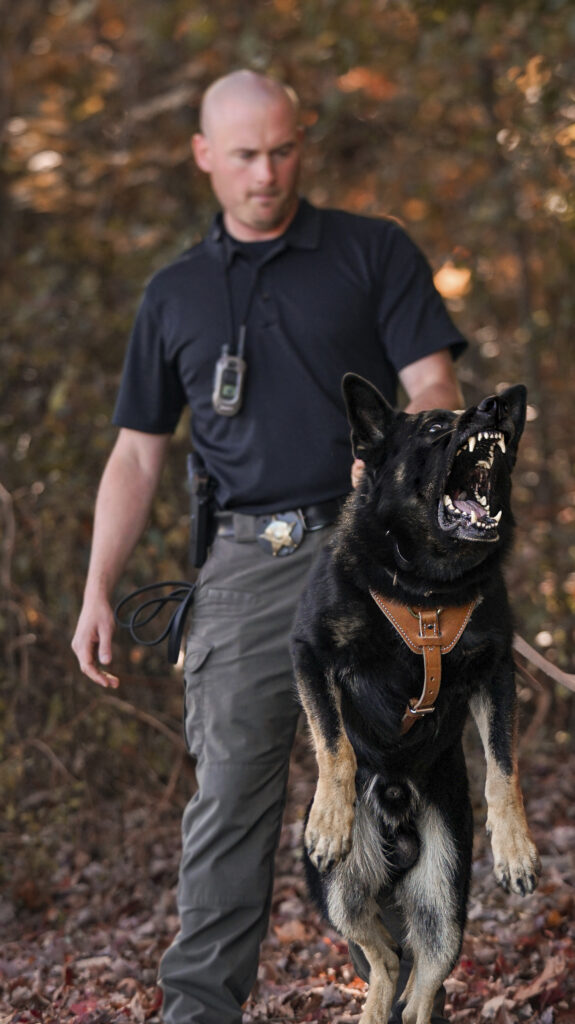
Our patrol dogs are trained for apprehension and handler protection, with an emphasis on responding to people and realistic scenarios rather than relying on visible training equipment as a cue. Training also addresses environmental distractions, including gunfire, while emphasizing responsiveness to the handler.
Every patrol dog is trained in:
Building searches, including multistory structures
Area searches in open and wooded environments
Evidence and article recovery
Scent discrimination and trailing across varied surfaces
Off-leash obedience, hand signals at a distance, and practical agility
Training Aligned With Your Agency’s Standards
Training can be built around the applicable certification standards of the United States Police Canine Association (USPCA), the North American Police Work Dog Association (NAPWDA), the National Police Canine Association (NPCA) or other certifying bodies. Let us know which standards your agency uses so we can account for them when planning the dog’s training.
Detection Training for Dual-Purpose K9 Teams
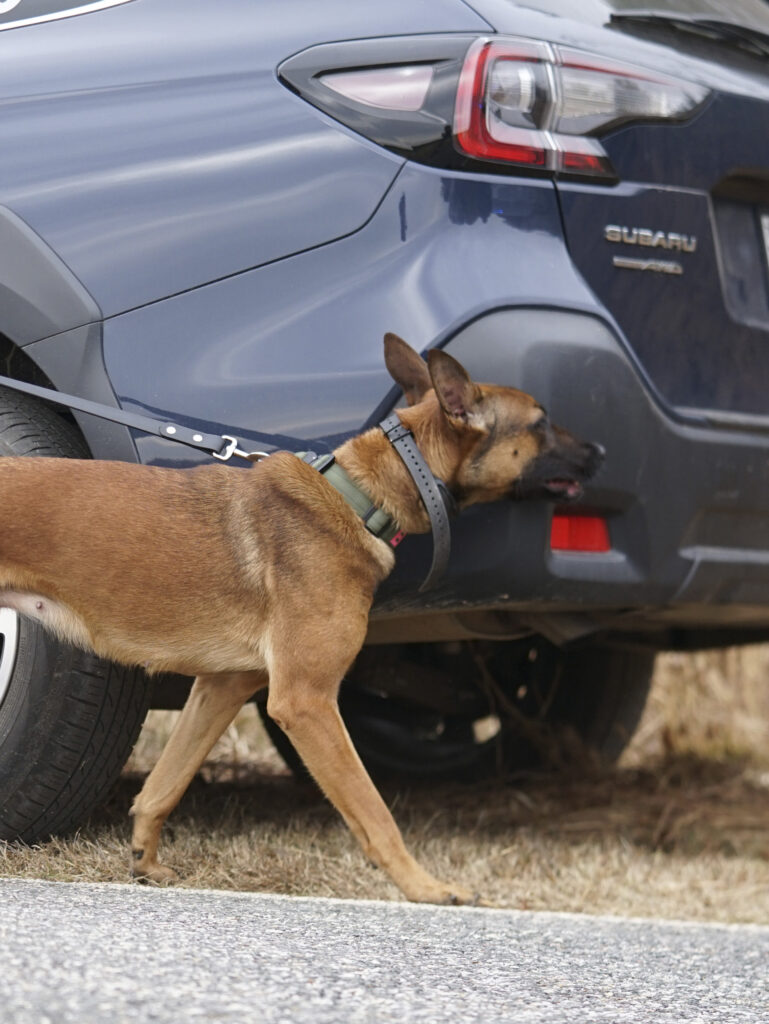
Detection Training: Narcotics or Explosives
Each dual-purpose police K9 combines patrol work with one detection specialty: narcotics or explosives. We work with your agency to select the specialty and tailor the training to the target odors and search environments your team will encounter.
The Odor First™ Advantage
Highland Canine Training developed Odor First™ to make target odor the basis of a dog’s alert. The system guides how we introduce target odors, train the dog and handler, and evaluate the team. The goal is for the dog to recognize the trained odor across different settings, even when the packaging, surroundings, or other incidental cues change.
For agencies, that means a dog prepared to work beyond familiar training setups and a handler who understands how to recognize the dog’s response without unintentionally influencing it. It also gives supervisors a framework for documenting performance, identifying gaps, and planning maintenance training. The result is a detection program your agency can evaluate and maintain over time.
Find the Right Dual-Purpose K9 for Your Agency
Tell us about your patrol assignments, detection needs, and certification goals. We’ll help you identify a dog and training program suited to the work your team does.
Dual-Purpose K9 Handler Training
Our handler training programs provide you with the confidence, knowledge and skills you need to get results in the field.
Your handler trains with the dog they’ll be working, taught by current and former K9 handlers and supervisors. Classes typically run 8–12 handlers with three instructors, so every handler gets real reps and real feedback. Courses can be customized for experienced handlers.
Topics include:
- Canine case law
- Report writing and record keeping
- Tactical building searches
- Nighttime operations
- Decoy techniques
- Advanced patrol techniques
- Ground fighting with the police K9
- Scent discrimination trailing
- Evidence recovery
- Canine first aid and CPR
- E-collar applications
- Detection and interdiction (dual-purpose teams)
What a Patrol Dog Brings to Your Agency
Officer Safety
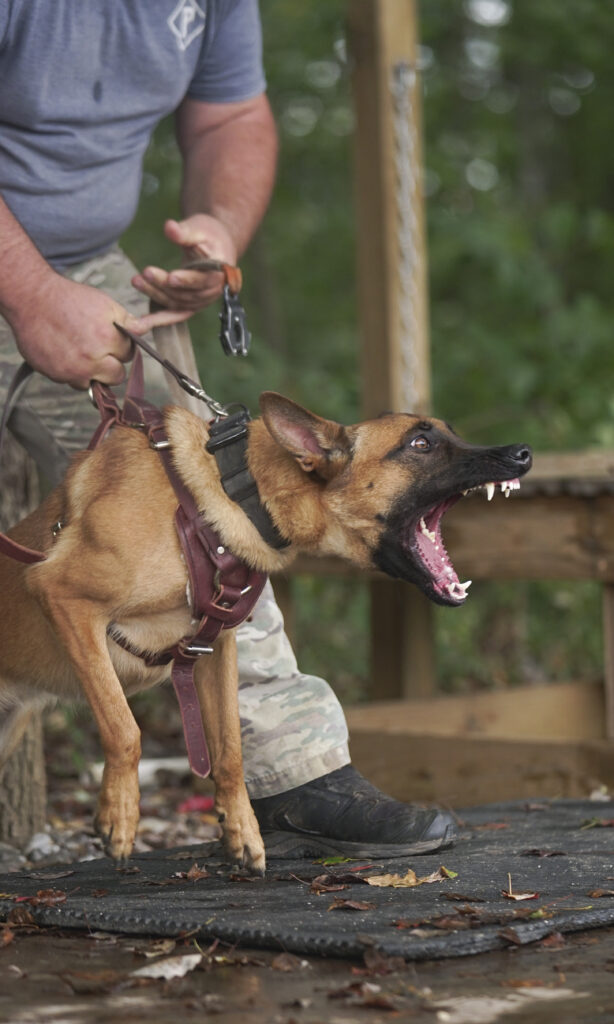
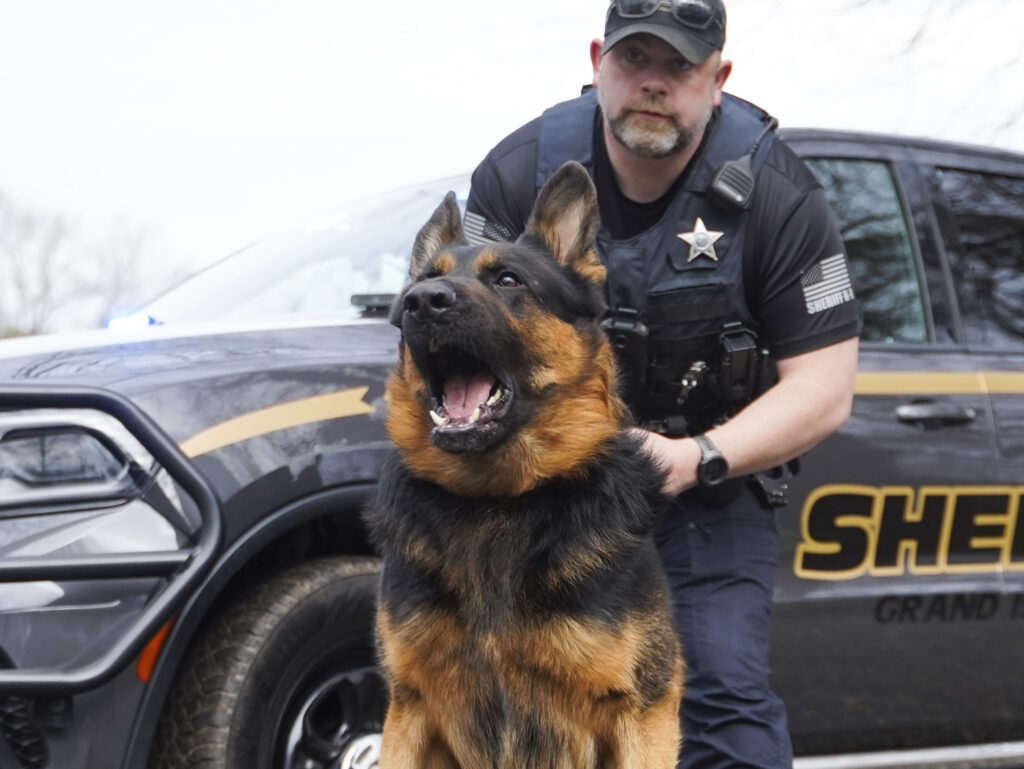
A patrol dog puts another layer of protection between your officers and a threat. Our dogs are trained in handler protection through scenario-based work. They’re conditioned to respond when the handler is attacked, and they’re neutral to gunfire, so they keep working when a call goes bad. The dog can also locate a threat before an officer has to close the distance. That’s often the most dangerous moment of a search, when officers are moving toward an unknown position.
The same goes for backup officers. A K9 team on scene gives the whole shift another tool to use before anyone has to go hands-on.
Finding Hidden Suspects
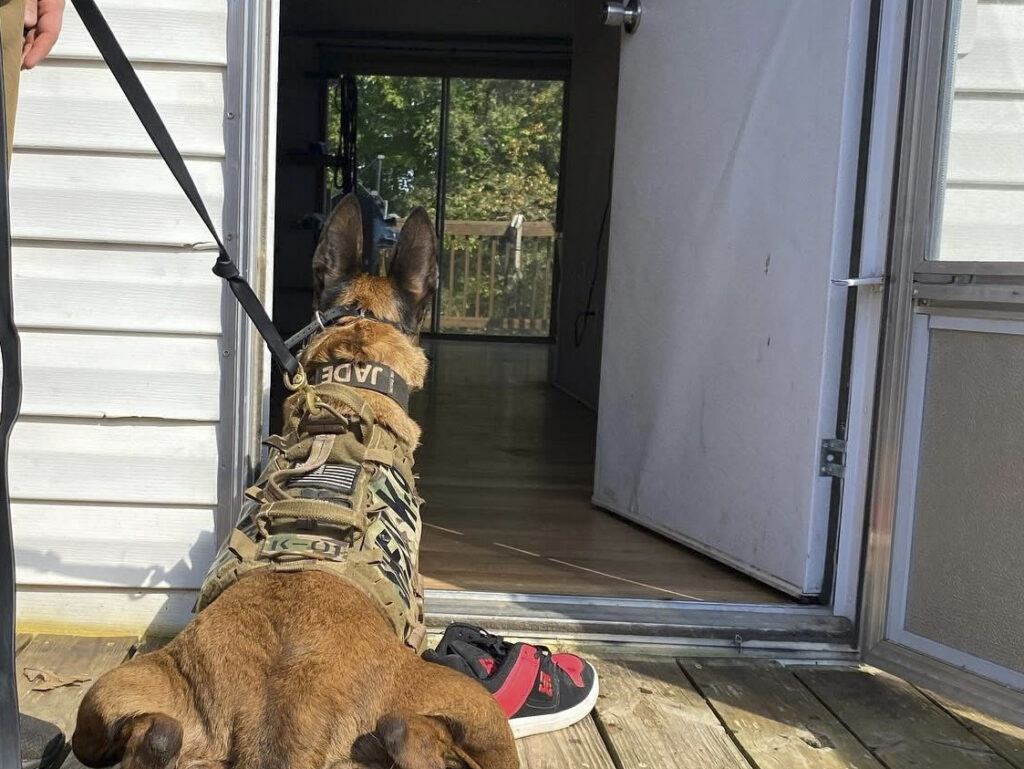
A suspect hiding in a building, a crawl space or a tree line is hard to find by sight. A trained dog finds them by scent. Our patrol dogs are trained in building searches (including multi-story buildings), area searches and wooded searches. One handler and dog can clear ground that would otherwise tie up several officers, with fewer officers exposed at doorways, corners and blind spots.
When a suspect has fled the scene, scent discrimination trailing lets the team follow that specific person’s scent. Evidence and article recovery helps find items dropped or thrown along the way. For your agency, that means more apprehensions, more recovered evidence and fewer hours spent on searches that come up empty.
Compliance Without Force
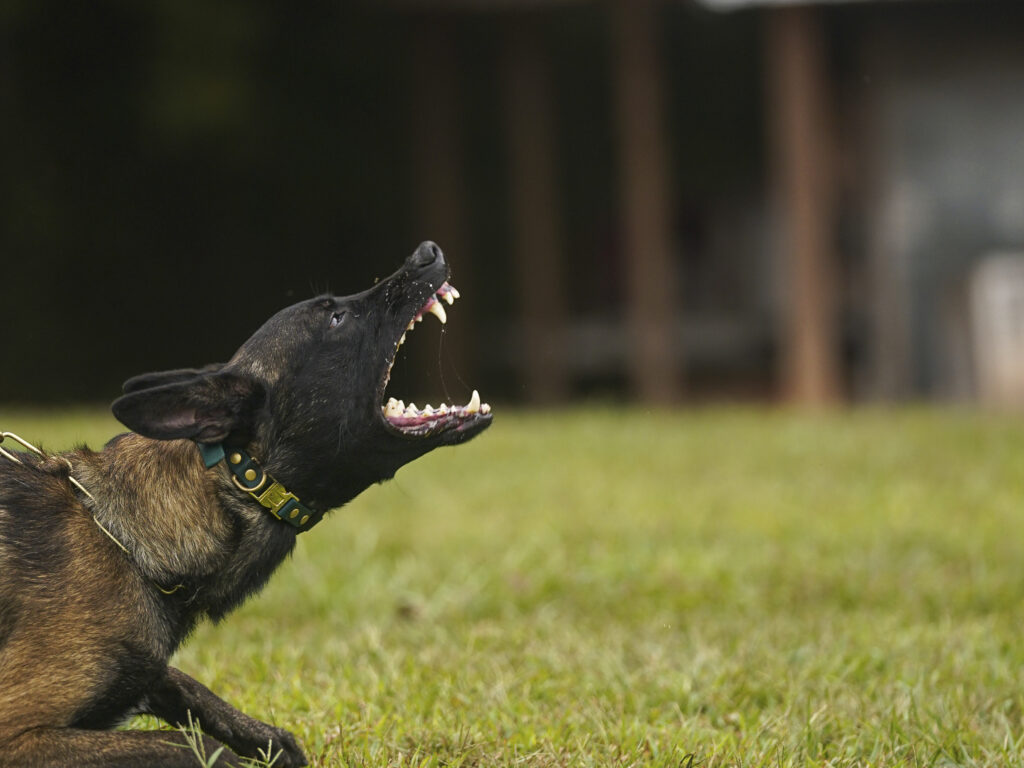
Often, a K9 warning and the sight and sound of the dog are enough for a suspect to give up. When that happens, the incident ends without anyone going hands-on, which is better for the suspect, the officers and the agency.
When the dog is deployed, it works under control. Our dogs are trained in off-leash and tactical obedience, and they’re trained to target multiple bite locations rather than whatever is closest. Handlers are trained in canine case law and in report writing, so they understand when a deployment is justified and can document it properly afterward.
One Purchase, Full Support
Starting a K9 unit usually means paying separately for the dog, the handler school, travel and lodging, and recertification, and then finding outside help when problems come up. With us, it’s a single purchase:
- The patrol dog, with X-rays and a two-year health guarantee
- The four-week handler course, with lodging and materials
- Online pre-course training
- Annual recertification at no extra cost
- Free in-service training for the life of the dog, plus phone support whenever the handler needs it
A dual-purpose dog adds narcotics or explosives detection to the same dog and handler, so one purchase covers two capabilities. Agencies can purchase through GSA. We provide a written bid your purchasing office can work from.
For command staff, this also means your unit isn’t on its own after graduation. Training, recertification and support stay with the same team that trained the dog.
Contact us today for more information about our Patrol & Dual-Purpose Dogs.
Our experienced team at Highland Canine Training can help you explore dog and training options for your intended work. Contact us to discuss available patrol dogs, handler courses, and your deployment needs.
Call 800-406-3243
Frequent Questions About Patrol & Dual-Purpose Dogs.
German Shepherds, Belgian Malinois and Dutch Shepherds from European import lines. Other breeds are available on request. We select for drive, nerve and social stability, because a patrol dog has to work hard on a call and stay calm everywhere else.
A patrol dog is trained for apprehension, handler protection, building and area searches, trailing and evidence recovery. A dual-purpose dog does all of that and is also trained in narcotics or explosives detection. One dog and one handler cover two jobs.
Apprehension and handler protection, building searches (including multi-story buildings), area and wooded searches, evidence and article recovery, scent discrimination trailing and variable surface trailing. They’re trained in off-leash obedience, hand signals at a distance, tactical obedience and practical agility, and they’re neutral to gunfire.
No. Our patrol dogs are man-oriented, not equipment-oriented. They’re conditioned to passive bites and handler attacks and trained to target multiple bite locations, so they work in real situations, not just against a sleeve or suit.
Yes. A four-week handler course is included with every patrol and dual-purpose dog, along with lodging and course materials at our North Carolina training center.
Case law, report writing and record keeping, tactical building searches, nighttime operations, decoy techniques, advanced patrol techniques, ground fighting with the police K9, scent discrimination trailing, evidence recovery, canine first aid and CPR, and e-collar applications. Dual-purpose teams also cover detection and interdiction.
Yes. Handlers complete online pre-course training before the hands-on course, so they arrive ready to work and get more from their time with the dog.
Classes typically run 8–12 handlers with three instructors, so every handler gets hands-on reps and direct feedback.
Current and former police officers, K9 handlers and supervisors. We’ve run this course for over 20 years and trained more than a thousand dual-purpose teams.
Training can be built to meet USPCA, NAPWDA, NPCA or other national standards.
Pricing depends on whether you need a patrol-only or dual-purpose dog and on the training package. Request a bid and we’ll send a written quote.
Yes. Request a bid and we’ll send a written bid your purchasing office can work from.
Absolutely! We encourage you to plan a visit and come meet the dogs we have available and spend some time with our staff to learn more about our programs and how we can best suit your agency’s needs.
Yes. Call us to talk through dogs, handler selection and training.
Your team isn’t on its own. Annual recertification is included at no extra cost, free in-service training is available as needed for the life of the dog, and your handler can call us any time.
Call us. Phone support is always available, and in-service training covers problems as they come up, for the life of the dog.