
This article was written by Jason Purgason, President of Highland Canine Training, LLC.
The article originally appeared in a recent edition of Revista Unidad K9, a Spanish-language publication focusing on police and military K9s. You can read the Spanish version in the publication here (article begins on page 11).
By the time the gates open, it is already too late to fix training deficiencies.
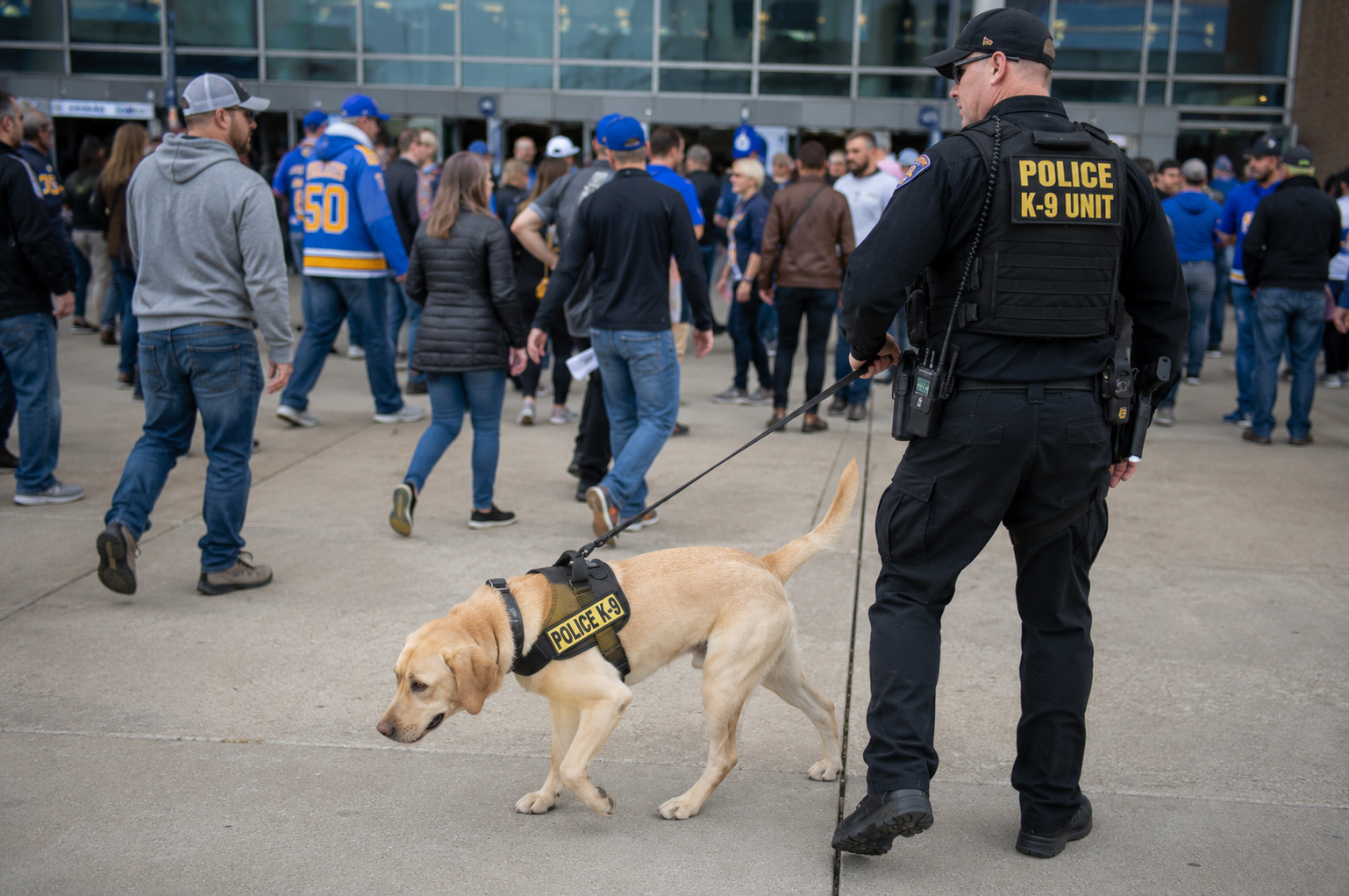
Large public events, such as festivals, political gatherings, sporting events and concerts present one of the most demanding operational environments for explosives detection dog (EDD) teams. These assignments often compress time, amplify stress, and expose dogs and handlers to variables that rarely exist during training or routine deployments.
All too often, detection teams are prepared only for sterile searches: quiet rooms, parked vehicles, or controlled training screening lanes. When these same teams are suddenly tasked with clearing a stadium or screening thousands of civilians, performance often degrades. This is often due to the fact that neither the dog, nor handler, has been conditioned for the realities of these types of large-scale operations.
Explosive detection at mass gatherings is not simply “more of the same.” It is a fundamentally different mission profile requiring specialized preparation.
Large events create unique operational challenges
Large-event operations introduce multiple stressors simultaneously. Dense crowds, constant movement, environmental noise, time pressure from command staff, heat, fatigue, disrupted airflow, and high public visibility all combine to challenge both canine and handler. Dogs must locate target odor amid human scent, food waste, cleaning chemicals, sweat, and exhaust, while handlers must interpret subtle behavioral changes while maintaining crowd safety and coordinating with security personnel. Operationally, these missions typically fall into three categories: static explosive searches, person-borne explosive screening, and large-area clearance operations. Each demands distinct skills and training priorities.
Understanding the threat: Static vs. Person-borne devices
Static explosive threats
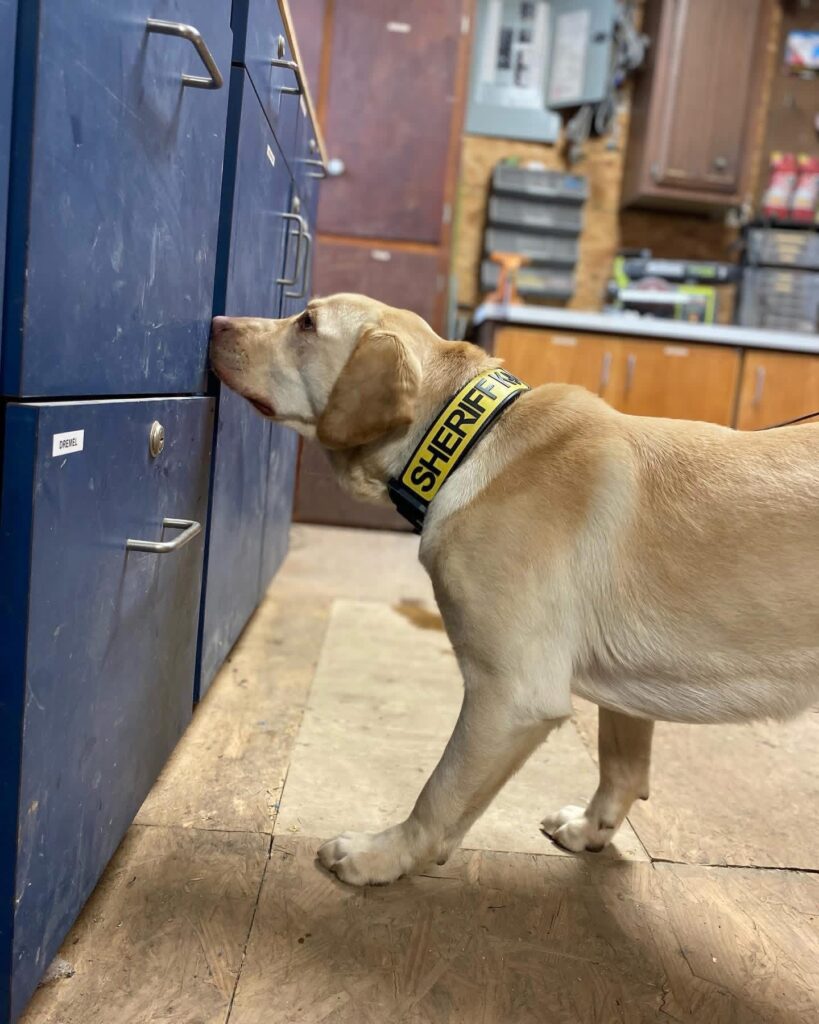
Static explosive threats are commonly concealed in bags, containers, vehicles, or infrastructure. Although most detection dogs are trained to locate stationary hides, problems arise when these hides are placed in complex environments such as stadiums or large venues. Odor rarely behaves predictably in these settings. Air conditioning systems can pull scent upward into seating areas, odor can pool beneath stairwells, and thermal lift from warm surfaces can carry scent away from its source. Dogs trained primarily on ground-level hides may struggle when odor is displaced vertically or laterally. During one pre-event stadium sweep, a dog displayed interest along a concrete wall near a concession area but failed to commit. The training aid had been placed inside a ventilation duct several meters away, and the dog was responding to displaced odor. Because the handler expected a direct source, the dog was moved off prematurely. Training had never addressed airflow displacement, illustrating how environmental complexity can undermine performance.
Problems can also arise when teams do not train often enough with large quantities of target odor. Threats in these types of environments will often be designed with large quantities of explosive material to have the greatest impact. Far too often, teams are regularly training with smaller quantities of target material from their kits. This creates a situation where these teams will be ill-prepared to effectively locate threats with much greater odor production values in these demanding, real-world environments.
Person-borne explosive threats
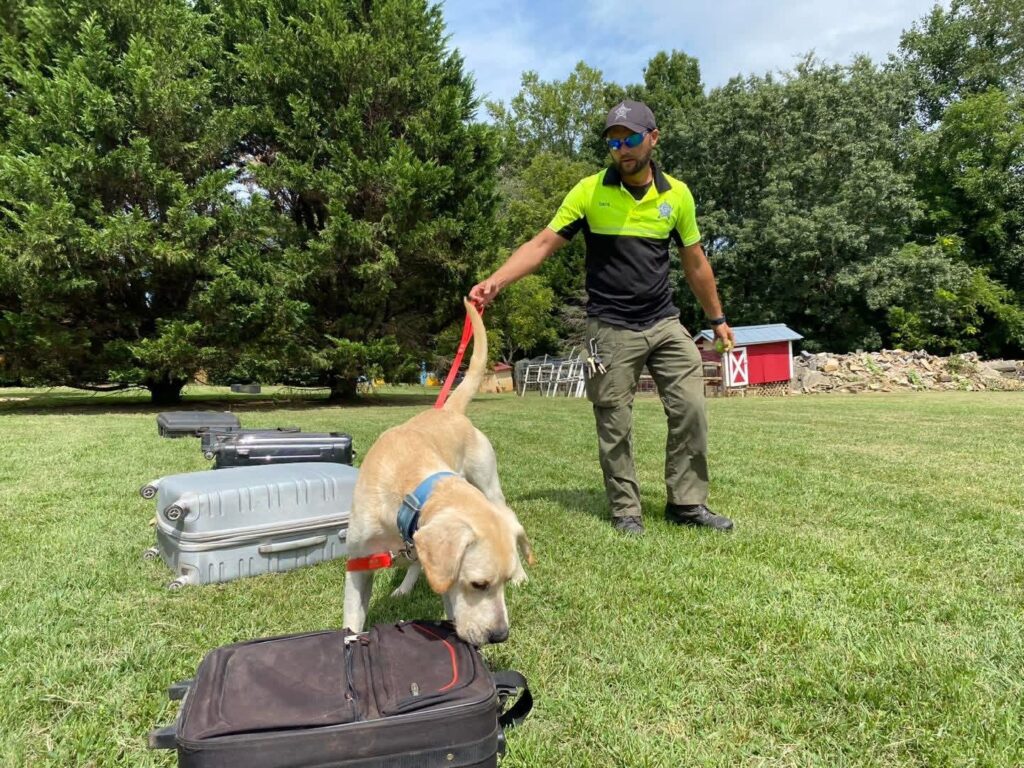
Person-borne explosive threats present an entirely different challenge for explosives detection dog teams. In these cases, the odor source is mobile and is being affected by heat produced from the human body. Explosive gases may be carried on clothing, footwear, hands, or bags, and movement creates constantly shifting odor plumes. Dogs must identify explosive odor while navigating venues in close proximity to civilians who may speak to them, touch them, or attempt to pet them. This type of work requires dogs with exceptional focus and handlers who understand how odor presents on the human body. Common training deficiencies include working only stationary role players, allowing dogs to visually target individuals, not conditioning the dogs to enough “blank” persons and handling skills that often suppress natural investigative behavior from the dog. During crowd-screening training, some teams observed dogs repeatedly gravitating toward individuals with visible training aids. Once hides were concealed and transferred between moving role players, performance dropped significantly, revealing that the dogs had been patterning visually rather than working odor. Effective person-borne detection requires blind setups, moving targets, and realistic concealment methods.
Note of caution: NEVER use dogs in person-borne screening unless they have had ample training and experience with these types of scenarios. The deployment of dogs trained only for static detection in person-borne operations is a recipe for disaster!
Selecting dogs for large-event work
Not every detection dog team is suitable for large-event deployments. Essential traits include environmental neutrality, high stress tolerance, social indifference, independent work, and the ability to recover quickly from pressure. Dogs that shut down in crowds, display defensive or aggressive behaviors, or become overly focused on people introduce considerable operational risk. Dog teams that do not have ample experience working in these types of environments should not be deployed and tasked with the responsibility of safeguarding these types of venues. Equally important is leadership’s willingness to recognize when a dog team should not be deployed. Removing an unsuitable dog from this mission profile is not failure; it is professional responsibility.
Core training principles
Odor must be independent of environment
Core training principles must reflect operational reality. Odor recognition must be independent of environment and context, as dogs trained primarily on boxes or vehicles often become context-dependent. Training locations should rotate constantly through parking structures, public corridors, seating areas, restrooms, outdoor markets, and service tunnels so that odor remains the only constant which helps to create obedience to odor.
Dogs must also be taught to work through chaos rather than having distractions minimized. Crowd noise, sudden movement, radios, food smells, and children running past are unavoidable in real deployments. Through deliberate proofing exercises in training and progressive exposure, dogs can learn that these factors are simply background noise. Proofing activities in training should be gradual and progressive, increasing incrementally in a way that challenges the dog team while providing opportunities for success. Proofing should also consider all stimulus that will impact searches-not just olfactory proofing. Many handlers and trainers often focus primarily on olfactory proofing – having the dog delineate between target and non-target odors (distractors and controls). This approach fails to effectively proof the dog from various other stimuli that can cause operational failures. Auditory, visual and physical stimuli should also be a part of proofing in each training session to effectively prepare dog teams for large-scale, real-world operations.
Additionally, mental and physical endurance must be developed. Large events often require hours of sustained searching, and short training repetitions, that we often see in regular maintenance training, do not effectively prepare dog teams for this reality. Extended search sessions with intermittent reward schedules (using motivational aids) help prevent fatigue-related false responses.
Preparing for person-borne screening
Preparing dogs for person-borne screening requires teaching them how explosive odor presents on a moving human. This training requires the right dog and a very in-depth plan of action to produce credible teams. As such, training to create person-borne teams from dogs that have been traditionally exposed to static searches by simply practicing by placing targets on static humans is an unreliable and ineffective system for developing credible person-borne teams and as such, should be avoided. Training must incorporate large-scale walking crowds, variable spacing between people, changing role players, and randomized target placement. Handlers must manage leash positioning to allow free movement while maintaining safety and detection integrity. Dogs should never be trained to focus on faces or body language; detection must remain odor-driven at all times.
Stadium and large-area clearance operations
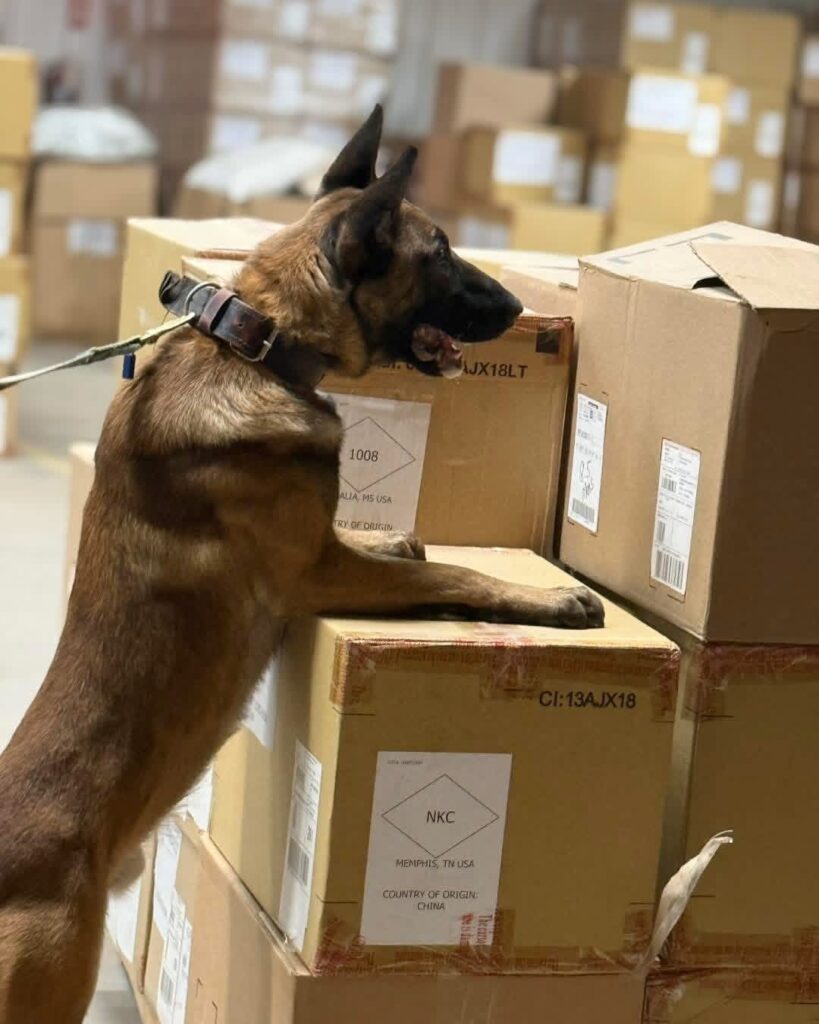
Stadium and large-area clearance operations demand systematic search strategies. Successful teams divide venues into sectors with clear accountability, avoiding both overlap and gaps. Handlers must understand how odor moves vertically in large structures, where explosive scent may rise into upper seating while the device remains below. Conditioning the dog to work independently while maintaining obedience to odor is paramount in the situations. Attempting to “detail” every fixture and crevice in these environments will result in early fatigue, exhaustion and increased false responses. Allowing the dog to work more freely will allow them the opportunity to search for and locate targets and to give an adequate response without fatiguing themselves unnecessarily. Environmental contamination is prominent, including food waste, cleaning agents, and pyrotechnic residue. Dogs must be proofed against these odors under realistic training conditions.
The handler’s role under pressure
The handler’s role under pressure cannot be overstated. Large-event success depends as much on human decision-making as canine ability. Handlers must recognize subtle behavioral changes, differentiate stress responses from true odor interest, and maintain search discipline despite command-driven time constraints. External urgency is one of the greatest risks, as event coordinators and supervisors often push for faster clears. Experienced handlers protect search integrity even when timelines tighten, understanding that a rushed sweep provides only false confidence.
Scenario-based training: the missing link
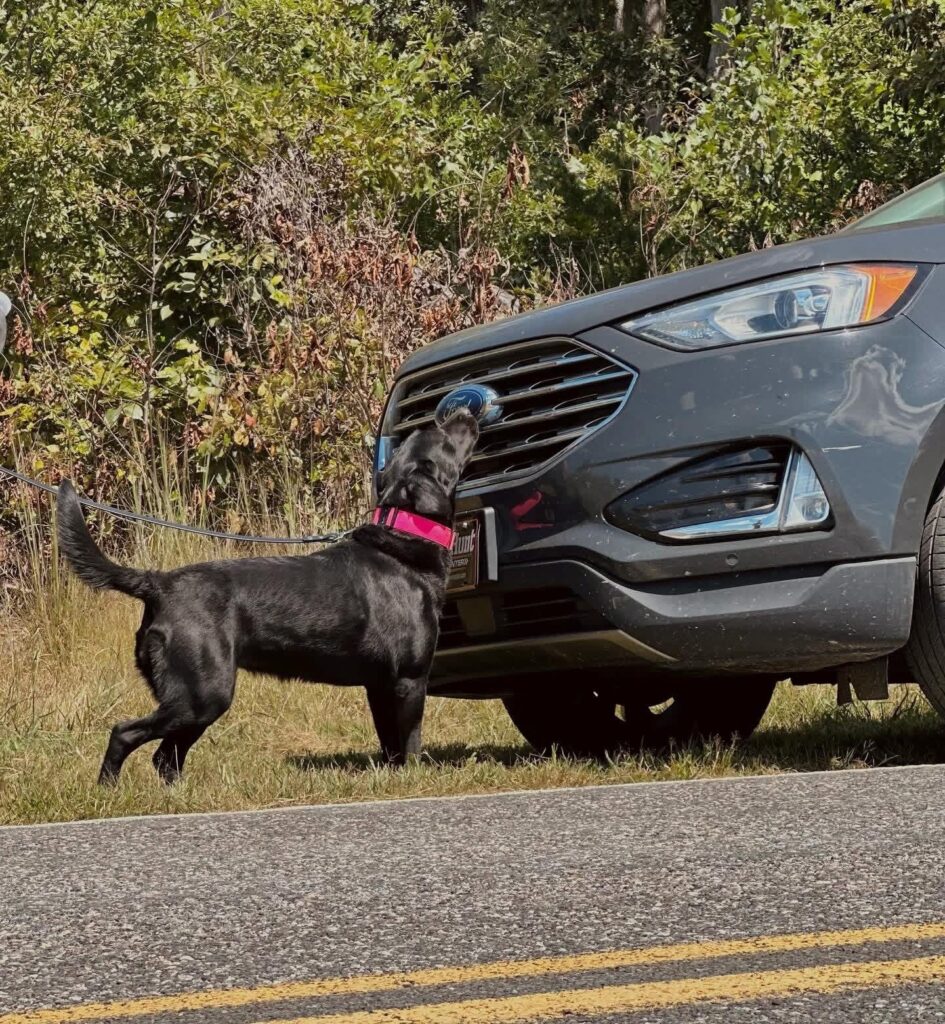
Scenario-based training remains one of the most overlooked components of preparation for operational deployments. Many teams train extensively yet rarely validate performance in environments that resemble actual deployments. Effective scenario-based training includes crowd role players, time limits, targets that mimic actual devices, real-world distractions and multi-team coordination. Sterile buildings, parking areas and other training environments do not prepare teams for reality. Validation should occur in stadiums, transit hubs, or public plazas whenever possible.
Common training and deployment errors
Across our industry, the same training and deployment errors appear repeatedly. These include odor recognition (particularly with large hides), minimal exposure to real environments and crowds, inadequate handler education, and deploying dogs unsuited for these environments. These weaknesses rarely surface during training and certification but become apparent during real-world events.
Measuring readiness
Large-event readiness cannot be assessed through basic detection exercises and odor recognition tests alone. True indicators include consistent motivation to hunt for and locate targets in demanding environments, the ability to re-engage after interruption, stable performance under heat, noise and other intense distractors, and sound handler decision-making under pressure. Maintenance training must continue year-round, as event-capable dogs deteriorate quickly without regular exposure to operational environments.
In conclusion: preparation Is professional responsibility
Explosive detection at mass gatherings is a specialized mission requiring deliberate preparation. Well-trained teams protect not only the public but also their own credibility and safety. Dogs prepared for crowds, handlers trained to read behavior under pressure, and programs built on realistic scenarios produce operational assets rather than liabilities. Lives depend on this level of professionalism. Detection under pressure is not optional, it must be the standard.